
Keep the cable away from the strike. Protect the service loop.
Forging cells combine heavy tools, impact, heat and scale. A dresspack review starts with the tool and workpiece envelope, then protects the cable route from the debris and heat that the process throws at it.
Start with what the route has to survive.
The process creates the environment; the robot and tool create the geometry. A useful dresspack review connects them before a series or diameter is fixed.
The tool and workpiece create a high-impact zone.
A cable loop that enters the zone can be struck even if it clears the programmed welding position.
The workpiece and tool radiate heat.
The outer sleeve and any exposed connector need a stand-off and an inspection plan.
Scale and debris can collect in openings.
A low point or open connector can trap material and make the route difficult to clean.
The tool and gripper need frequent access.
A route that crosses the service opening can be damaged during a die or tool change.
What to start with — and what to challenge.
Start here
- Map the tool, workpiece and impact zone before fixing the cable path.
- Keep the service loop outside the strike and scale-collection areas.
- Use a replaceable outer protection zone where the process exposure is highest.
- Check the route with the tool open, closed and at its maintenance position.
Challenge before release
- Assume the home position represents the worst exposure.
- Place a connector at a low point where scale can collect.
- Use a thin cover as a substitute for a defined stand-off.
- Copy a welding-cell route to a forging tool with a different stroke or service opening.
The route may need more than one system.
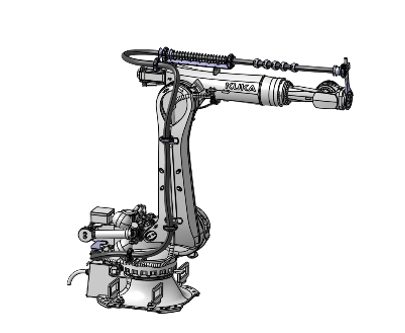
Series 3
External spring
Length compensation for a large tool stroke.
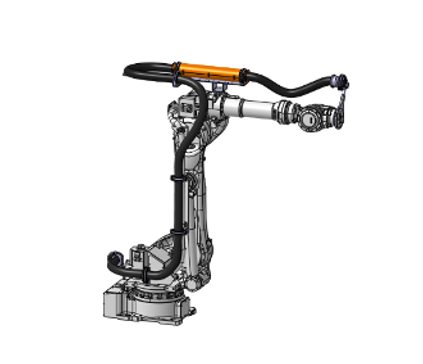
Series 4
Straight Barrel
Replaceable outer protection in a high-exposure zone.
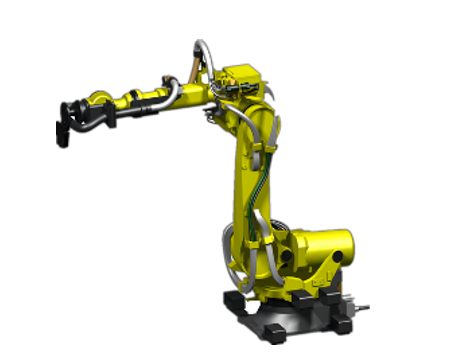
Series 6
C-flange
Body-following route with service access.
What we need to answer usefully.
- Robot brand, exact model, payload, reach and maximum tool load
- Forging tool, gripper or manipulator geometry and full stroke
- Workpiece envelope, impact direction and maintenance positions
- Heat sources, scale/debris path and cleaning method
- Cable and hose bundle diameter, weight and minimum bend radius
- Tool-change, die-change and inspection access
Before the kick-off call.
Can a welding barrel be used in a forging cell?
It can be considered as an outer-protection starting point, but the impact, heat and service exposure are different. The exact tool and cell geometry must be reviewed.
How do we protect the cable from scale?
Start with the debris path and the low points of the route. A cover is useful only when it can be inspected, cleaned and replaced without dismantling the bundle.
Is a larger cable loop safer?
Not necessarily. A larger loop can enter the tool or workpiece envelope. The route needs controlled slack and a defined stand-off.
Start with the robot and the thing that goes wrong.
We will turn the brief into a reference architecture, a list of unknowns and a drawing path.